- News
- Driving Innovation in Curing Presses. Kevin Rolfe in an interview with Sharad Matade, Tyre Trends
Driving Innovation in Curing Presses. Kevin Rolfe in an interview with Sharad Matade, Tyre Trends

Driving Innovation in Curing Presses
In 2022, HF’s curing business achieved notable success despite supply chain challenges caused by the Ukraine-Russia conflict. While demand softened in Europe, there was a growing market for tyres in the Americas. “Meeting supply and delivery requirements became a significant challenge, with longer lead times for equipment purchases. However, HF focused on innovations in standardised curing presses, smart technology integration and energy-saving initiatives. Customer expectations for safety and energy efficiency remained a priority,” says Kevin Rolfe, VP – Sales at HF TireTech Group. Exploring the shift from steam to electric curing, HF is committed to providing cuttingedge solutions to maintain its industry leadership in curing presses.
Image: Kevin Rolfe, VP–Sales at HF TireTech Group
2022: Record year
We experienced a remarkable performance last year. However, it is essential to acknowledge the continuously evolving nature of the supply chain. In addition, the ongoing conflict between Ukraine and Russia has significantly impacted our supply chain and associated costs. Consequently, maintaining a steady supply and timely deliveries to our customers has presented a substantial challenge. On the demand side, we observe a positive trend. While demand in Europe may have slightly softened due to the situation in Eastern Europe, there is a growing demand for tyres in the Americas. Therefore, it is crucial to swiftly address these demand gaps. In many cases, purchasing decisions for equipment are made based on anticipations due to longer lead times. Compared to the previous six- to eight-month delivery period, we are currently facing delivery times of 12 to 14 months.
Challenges in product delivery
Enhancing standardisation with our customers facilitates advanced ordering. Long lead items, such as IO cards and HMIs for all cabinets, are standard components that allow us to be more proactive in preordering with our suppliers. We strive to employ creative solutions, including immediate or advanced component ordering, to reduce lead times.
Innovations in HF curing presses
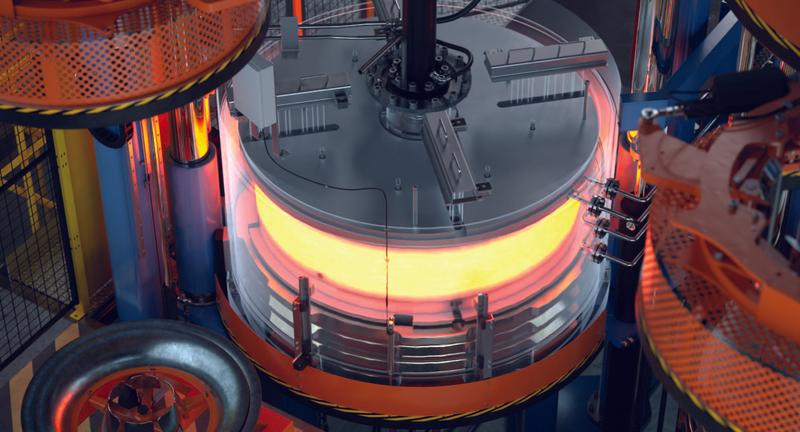
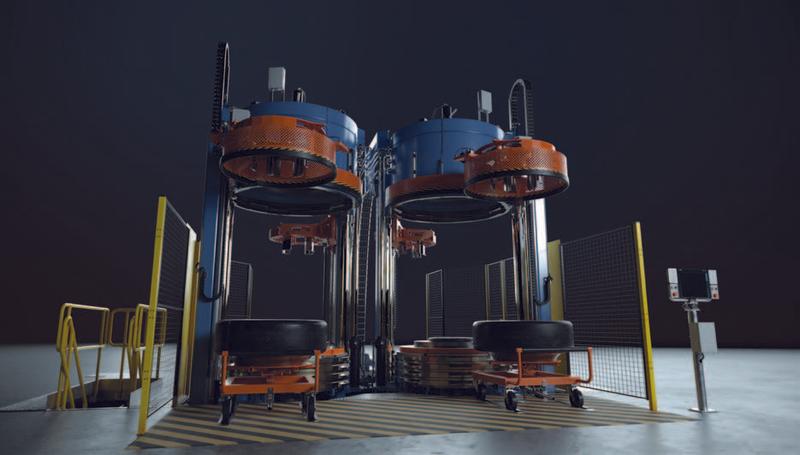
Our focus is currently on innovations related to standardisation and alternative supplies. We aim to increase the modularity of our solutions, allowing for easy integration of different features. The availability of alternative suppliers enables seamless swapping of components. Additionally, we are actively pursuing innovations that optimise space utilisation in our solutions. We offer multiple layout configurations; for instance, our 52-inch curing press occupies the space of a 40- or 42-inch mechanical press. Furthermore, our HF CureMaster truck press has been exceptionally successful.
Standardised presses
We strive to utilise standard components, such as frames, squirts and loader columns, across our entire range of curing presses. Customisation is focused on centre mechanisms, SMO, loader and unloader chucks, green tyre stands, cooling conveyors with or without PCI and associated safety features. These things we modify in the heating packages for the customers.
Smart presses
We are actively working on incorporating more feedback from machines to provide customers with insights into issues and their resolutions. This intuitive approach ensures that maintenance personnel can quickly identify and address problems. Moreover, we are exploring predictive maintenance strategies to prevent issues from occurring altogether.
Energy saving
In the case of steam presses, our goal is to maximise efficiency. We conduct thorough analyses of the entire press system, including piping, to identify areas where energy savings can be achieved. In addition, by implementing specific types of insulation based on our tests, we aim to minimise heat loss.
Customer expectations
Most customers expect a comprehensive solution accompanied by the CE mark, regardless of the destination or origin. Safety remains a top priority. Energy efficiency is another critical concern, as the tyre industry focuses on reducing CO2 emissions throughout the entire production and delivery process. Curing presses consume a significant amount of energy, which has sparked discussions about potentially transitioning from steam curing to electric curing.
Steam vs electric
Currently, steam and nitrogen are predominantly used for heating. Shifting to fully electric heating would entail replacing existing heating packages with new components and central machinery. We are actively working on this transition, aiming to capture a substantial portion of the market. However, it should be noted that this shift is still in progress, and we are actively pursuing this development.
Market focus
For the past 20 years, we have consistently supplied a significant number of presses to the Americas. Additionally, we have provided presses for greenfield projects in Serbia. While China remains a prominent market in Asia, we are experiencing a relatively quieter period, primarily due to the Covid-19 pandemic. Nonetheless, we are engaged with several Asian suppliers.